Previous Story
Senior White House Adviser thinks Camp UNITE could be duplicated
Posted On 05 Aug 2019
Comment: 0
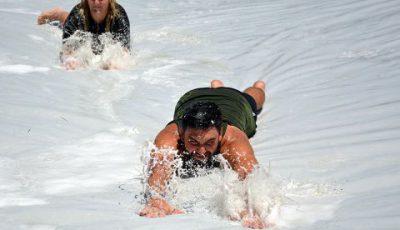
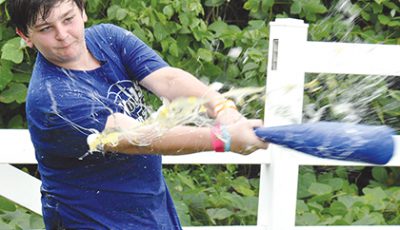
The 13th Annual Camp UNITE, which was held on the campus of the University of the Cumberlands last week, brought more than 240 youth from 29 counties to Williamsburg for four days of residential drug awareness leadership and adventure programs.

White House Office of National Drug Control Policy Senior Adviser for Rural Affairs Anne Hazlett visited Camp UNITE last week, and thinks it could be duplicated elsewhere.
It is a program that is making an impact and was made possible by many community partnerships, including nearly 150 volunteers. It is also a program that is could be potentially be replicated, especially in many rural areas.
This is part of the lesson that White House Office of National Drug Control Policy Senior Adviser for Rural Affairs Anne Hazlett is taking back with her to Washington, D.C., after visiting the camp for two days last week.
“I will take back how important having support for local leaders – like (Operation UNITE CEO and President Nancy Hale) and the team that is here and all of the volunteers that can make something like this possible – how important that partnership is. One person can’t do this alone,” Hazlett said.
“I am very excited about that idea that we can replicate things in other places … Operation UNITE has been a strong partner to us. The camp is something I think is such centerpiece of all of their efforts. I just wanted to come see it first hand.”
Although Hazlett is from Indianapolis, she noted that her home state is very rural like much of Kentucky, and drugs have hard hit many of the rural areas.
She said that while no one in her family has been directly impacted by drugs, she has done a lot of work in rural communities and volunteer ministry work that has shown her first hand the impact that drugs have on rural communities.
Hazlett noted that programs like Camp UNITE highlight “best practices.”
“Often rural communities feel overwhelmed by this issue. While no two communities are the same, many look similar. To be able to come and learn and see something that has been in play for 13 years now, and to see the impact it has had,” is important, Hazlett said.
“You see kids that have come back year after year after year. They come back. They are supported here for a week, and then they go back to their own communities and own families.”
In addition to funding, Hazlett said she feels that it is very important to lift up what is working and show examples of things that are working so other communities can learn.
“I can share this example to other communities I see and help guide them to a leader like Nancy, who can then explain, ‘This is how we did it. This is how we got it going,’” Hazlett said.
“Dollars are important but there are a lot of people, like myself, from all over the state coming to see it so we can replicate it at other places.”
Hazlett noted she thinks it is also important that the camp takes place on a college campus.
“It helps these kids to see and begin to dream and think about their futures. They are the future leaders of our state and a lot of that conversation begins in a setting like this. This all ties together. It is not just about keeping kids off dugs, but what can they become and do,” she added.